
Three Kingdoms Civs Guide: Which One Should You Play?
If you want a civilization focused on quick conquest, Wei offers strong armor units and cavalry but is vulnerable to early archer attacks, making it suitable for aggressive players. Shu emphasizes siege tactics and defenses, ideal if you prefer long-range combat and fortified positions, while Wu excels in naval warfare and river control, fitting players who favor mobility and water-based strategies. Korea provides research bonuses for tech-focused play, and civilizations like Sweden or Mansa Musa offer unique victory benefits. Exploring each option helps you pick what aligns best with your style.
Scout Report
- Choose Wei for aggressive early conquest and powerful gunpowder units.
- Select Shu if you prefer fortified defenses and siege tactics.
- Play Wu for naval dominance and river control strategies.
- Consider your playstyle: offense, defense, or economy focus.
- Match civilizational strengths with your preferred victory conditions.
What Are the Main Civilizations in the Three Kingdoms Period?
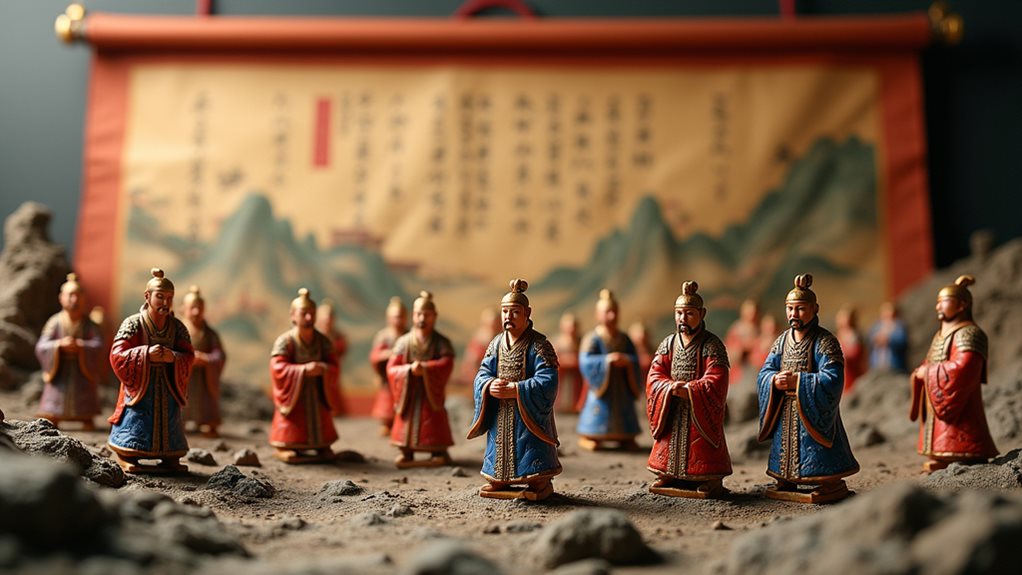
During the Three Kingdoms period, China was divided into three main civilizations, each led by a different kingdom with its own territory, rulers, and strategies for survival. These kingdoms engaged in cultural exchanges and sought territorial expansion to strengthen their power. These rivalries and alliances often resulted in significant military conflicts, shaping the course of Chinese history. The rivalry among these kingdoms often led to military conflicts and alliances that significantly influenced the course of Chinese history. Wei controlled the north, Shu in the southwest, and Wu along the Yangtze River. These kingdoms shaped China’s history through their interactions and growth, often employing strategic warfare to outmaneuver their opponents.
Which Civilization Fits Your Playstyle?
Choosing the right civilization depends on your preferred playstyle, whether you favor aggressive expansion, defensive tactics, or long-term economic growth. Each civilization has unique strengths, such as Wei’s quick early-game conquest, Shu’s fortified defenses, or Wu’s naval dominance, which influence your strategic focus areas. Understanding these differences helps you select the civilization that best aligns with how you want to approach the game’s objectives. Additionally, considering the advantages of different civilizations can help tailor your strategy for better success and enjoyment during gameplay. Recognizing unique strengths and weaknesses of each civilization allows you to adapt your tactics effectively to various in-game situations, especially when leveraging specialized unit bonuses to outmaneuver opponents.
Playstyle Preferences
Understanding which civilization best suits your playstyle is essential for developing an effective strategy in the game. Civilizations emphasizing cultural influence and artistic representations often align with players who value creativity and expression.
Defensive civilizations focus on fortification, while aggressive ones prioritize offense.
Balanced civilizations support versatility, matching general preferences, and unique ones require specific tactics for strategic advantage.
Strategic Focus Areas
Different civilizations in the game are designed to emphasize specific strategic focus areas, which means that your choice should align with your preferred style of play.
Some civilizations focus on ancient warfare, prioritizing conquest and military expansion.
Others are influenced by cultural factors that shape diplomacy and stability.
Understanding these focuses helps you select a civilization that matches your strategic approach.
Civilizational Strengths
Different civilizations in the game are designed to excel in various aspects of gameplay, meaning that your selection should match your preferred approach to strategy.
Some civilizations focus on ancient warfare, emphasizing strong armies and siege tactics, while others excel in cultural influence, spreading ideas and stabilizing regions.
Choose based on whether you prioritize military strength or cultural power to match your playstyle.
How to Evaluate Civilizations’ Strengths and Weaknesses
To effectively evaluate the strengths and weaknesses of civilizations in the game, you need to contemplate multiple factors that influence overall performance across various game modes. These include:
- Cultural influence, affecting how civilizations develop unique abilities
- Technological advancements that improve unit production and defenses
- Resource efficiency, impacting growth and expansion
- Defensive structures and map control for security
- Offensive capabilities and alliances shaping strategic options
Furthermore, understanding the civilization tier rankings can help you identify which civilizations excel in specific areas and adapt your strategies accordingly. Recognizing the unit composition and the timing of key military transitions, such as the infamous late-game halberdier flood, can be crucial for gaining an advantage.
Major Civilizations: Key Strengths and Weaknesses

Understanding each civilization’s unique abilities, strengths, and vulnerabilities helps you choose the best strategies for your playstyle. A good grasp of archer strengths and weaknesses can inform your decision on which civ to favor depending on the map and your preferred tactics. For example, Wei’s powerful gunpowder units and armored cavalry can dominate late-game battles but are vulnerable to early archer rushes. While Shu’s focus on archery and siege makes them effective in open-field combat but less mobile against cavalry flanks. Recognizing these key aspects allows you to adapt your tactics and maximize each civilization’s advantages while minimizing their weaknesses. Additionally, knowing the unique unit roles of each civ can help you capitalize on their specific strengths during different phases of the game.
Unique Civilizational Abilities
The unique civilizational abilities of the Five Civilizations in the Three Kingdoms expansion of Age of Empires II define their distinctive strengths and influence their overall strategies.
- China’s bonus cavalry and early economic growth reflect its cultural influences and historical accuracy in emphasizing cavalry dominance.
- Korea’s science enhancement through Seowon highlights traditional scholarly values.
- Vietnam’s fast units and resource bonuses mirror guerrilla tactics rooted in history.
- Japan’s naval focus aligns with its maritime history.
- Thailand’s infantry strength reflects historical warfare emphasis.
Strengths and Vulnerabilities
Each civilization in the Three Kingdoms expansion has specific strengths that can give you an advantage, but they also face vulnerabilities that can put them at risk if not managed carefully. Cultural influences and technological advancements shape their strengths and weaknesses. Here’s a visual overview:
| Strengths | Vulnerabilities |
|---|---|
| High hero attack power | Low stability loss, risking rebellion |
| Superior hero movement speed | Weak late-game province defense |
| Strong province defense | Reduced population efficiency |
| Increased stability bonuses | High stability penalties |
| High population efficiency | Low resilience in prolonged conflicts |
Playstyle Adaptations
Have you considered how each civilization’s unique hero units and mechanics influence their overall playstyle? These differences reflect cultural influences and historical accuracy, shaping strategic choices.
For example,
- Shu focuses on defensive fortress units,
- Wei emphasizes mounted archers for open-field combat,
- Wu prioritizes naval hero units,
highlighting their distinct strengths and weaknesses within their strategic identities.
Best Civilizations for Beginners
Choosing the right civilization is crucial for beginners because it can greatly impact your early game progress and overall strategy. The following table summarizes options, focusing on cultural influences and historical accuracy:
| Civilizations | Key Benefits |
|---|---|
| China | Fast building speed, Sun Tzu for early progress, enhances City Hall |
| Japan | Moderate early action points, good for mid-game shifts |
| Korea | Highest research bonuses, ideal for research-focused players |
| Germany | Training speed, troop readiness, good after initial speed increase |
Additionally, selecting civilizations with forgiving mechanics can help new players learn the game more effectively, such as those with easier economic management, which can be a significant advantage for beginners.
Mastering Civilizations With Unique Units and Abilities
Excelling in the unique units and abilities of different civilizations can substantially improve your gameplay by leveraging each civilization’s strengths in Cultural Influence and Technological Advancements.
- Wei’s Tiger Cavalry resists arrows, gains attack with each enemy defeated, and functions as vampiric cavalry.
- Shu’s Shambe Raider offers rapid movement and long-range burst fire for flexibility.
- Han’s Iron Pigota provides a defensive ability that negates one melee attack.
- Wei’s Minguang armor enhances gunpowder control, increasing sustained fire.
- White Feather Guard scales health with group size, slowing enemies effectively.
How Civilizations Differ in Military, Economy, and Diplomacy
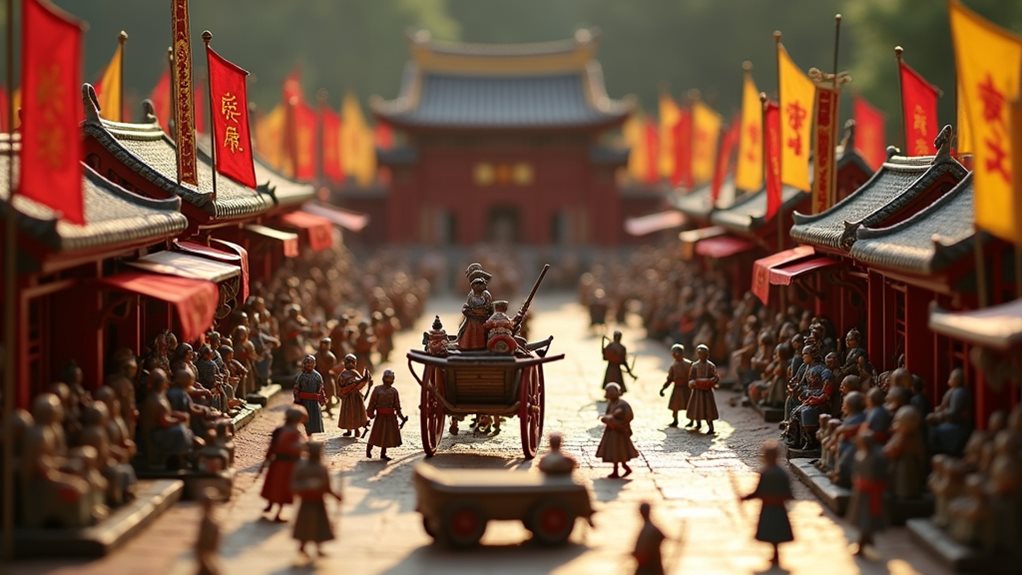
Civilizations in the Three Kingdoms period differ markedly in their military strategies, economic practices, and diplomatic approaches. Some focused on powerful siege weapons and mass-produced crossbows to strengthen their armies.
Others relied on alliances and strategic literature to build diplomatic ties and expand influence. Understanding these differences helps explain how each civilization maintained its power and influenced future dynasties.
Military Strategies and Strengths
In the Three Kingdoms Civilizations from Age of Empires 2, each civilization has distinct military strengths and strategies that influence how they fight on the battlefield.
Cultural influences shape unit design, such as heavy cavalry armor bonuses, while political alliances affect troop movements.
- Liang emphasizes armored heavy cavalry
- Wei relies on mobile, rapid units
- Shu-Han focuses on long-range burst fire
- Katans excel in siege warfare
- Tiger Cavalry absorbs enemy health upon defeat
Economic and Diplomatic Approaches
Understanding how civilizations manage their economy and diplomacy is key to developing a successful strategy in the Three Kingdoms scenario.
You’ll need to contemplate economic policies like taxing the peasantry and upgrading commanderies for income.
Diplomatic alliances through trade agreements and negotiations help secure steady income, improve relationships, and enable resource exchanges, shaping your overall economic and diplomatic success.
Which Civilizations Are Best for Achieving Victory?
Certain civilizations excel at achieving specific types of victory, making them more suitable depending on your strategy.
For example, some focus on cultural policies and building theaters, while others utilize diplomatic alliances through diplomats and trade.
- Sweden generates +15 culture per theater square.
- Canada provides +20 diplomats from ice and forests.
- Mansa Musa gains +15 diplomats from gold and trade.
- Gran Colombia offers +20 science from mountains.
- Egypt gains +25 faith from deserts.
Tips to Optimize Civilizations’ Unique Traits
Maximizing each civilization’s unique traits requires careful analysis and strategic planning, considering historical accuracy and cultural influences.
Focus on character traits for task efficiency, manage court positions to reduce loyalty issues, and optimize geographical advantages for growth.
Understanding how traits align with cultural backgrounds helps you develop effective strategies customized to each civilization’s strengths.
Comparing Civilizations: Strengths, Weaknesses, and Fun Factor
Comparing the three main civilizations—Cao Wei, Shu Han, and Eastern Wu—reveals distinct strengths and weaknesses that influence their gameplay and strategic options.
You’ll notice their cultural influence and historical accuracy shape unique features: Cao Wei’s elite cavalry, Shu Han’s self-healing infantry, and Eastern Wu’s naval dominance.
Each offers different fun factors rooted in their historical roles and technical strengths.
Final Recommendations: Choosing the Right Civilization for You
Choosing the right civilization depends on your preferred playstyle and the strengths you want to emphasize during the game. Consider cultural influences, which shape how civilizations expand and interact.
Technological advancements impact their ability to develop faster and stronger. Analyzing initial stats, expansion strategies, and victory conditions helps determine which civilization aligns best with your approach and goals.
GG
Choosing the right civilization in the Three Kingdoms game depends on your preferred playstyle and strategic goals. Consider each civilization’s strengths, weaknesses, and unique traits to find the one that suits you best. Whether you focus on military power, economic growth, or diplomatic strategies, understanding these factors helps you make an informed decision. Carefully evaluating these aspects guarantees you select a civilization that aligns with your approach and enhances your overall gaming experience.