

AOE2 Build Order Cheat Sheet: All Core Builds On One Page
A thorough AOE2 build order cheat sheet provides step-by-step instructions for each game stage, enabling you to optimize resource gathering, villager production, and unit training. It covers early strategies like village placement, scouting, and constructing defenses, as well as shifts between ages and economy upgrades. The sheet details specific timing for vital upgrades and how to adapt strategies based on civilization and map type. If you continue exploring, you’ll gain a clearer understanding of how to execute these plans effectively.
Scout Report
- Provides a comprehensive overview of essential build orders and strategies across all game ages.
- Organizes core concepts like resource management, scouting, and timing into easy-to-reference groups.
- Highlights common pitfalls, best practices, and strategic milestones for smoother gameplay.
- Emphasizes the importance of precise execution, adaptation, and historical context for effective planning.
- Serves as a one-page cheat sheet to optimize early game, transition, and late-game strategies.
Understanding the Basics of Age of Empires II Build Orders

Understanding the basics of Age of Empires II build orders is essential for developing effective strategies in the game. You should focus on village placement to optimize resource gathering and plan scout routes early to locate food sources like sheep and boars efficiently. Properly positioning villagers and scouting early helps maintain a steady economy and prepares you for advancing through game phases. Additionally, understanding build order decision-making—when to use each opening based on civ matchups, map type, and early scout information—is crucial for adapting your strategy effectively.
Planning Your Early Game: Constructing and Gathering Resources
To start your early game effectively, you should focus on constructing enough houses to support your growing population and prevent any delays. At the same time, prioritize the gathering of food and wood to guarantee a steady resource flow. Efficiently assigning villagers to gather from sheep, boars, and berries, and placing lumber camps near trees, helps maximize resource collection and maintain a balanced economy. Additionally, preparing early defenses, such as building watchtowers or other structures, can protect your villagers from potential attacks. Exploration and resource gathering are crucial early steps, as locating key resource clusters quickly ensures a more efficient economy. Understanding the timing and conditions that make opponents unable to punish your rush is essential for executing a successful fast imperial strategy, giving you a significant advantage in the game. This approach gives you a strong foundation for advancing through the ages.
Initial Housing Strategy
Why is it important to build houses early in Age of Empires 2, and how does this affect your overall strategy? Proper housing placement enhances villager efficiency and prevents population caps from blocking resource gathering.
Houses should be close to the Town Center for quick villager movement.
Placement near resources avoids blocking essential paths.
Coordinating construction speeds up early population growth.
Efficient Resource Gathering
Efficient resource gathering in the early game is vital for establishing a strong economy and maintaining a steady flow of villagers and units. Focus on resource prioritization by positioning villagers effectively, such as splitting them on berry mills to reduce movement and tasking few villagers on each food source.
Proper villager positioning guarantees quick collection and minimizes idle time.
Early Defense Preparations
Constructing effective early defenses is essential for protecting your economy and preparing for potential enemy attacks. Focus on walling strategies and defensive tower placement to create barriers and cover key approaches.
- Build walls along choke points and gaps with palisades to funnel enemies toward your town center.
- Place towers at strategic gaps to cover potential breaches.
- Align non-economy buildings to form continuous walls around your base.
How to Transition From Feudal to Castle Age Effectively
How can you shift from Feudal to Castle Age in a way that maximizes your economy and military readiness? Focus on completing essential upgrades like Wheelbarrow and Double Bow Saw before advancing. Construct necessary infrastructure such as blacksmiths and markets. Timing your transition around 28 population guarantees efficient resource use, balancing Feudal tactics with Castle strategies for maximum growth. Utilizing precise build orders can further streamline your progression and reduce vulnerability during the transition.
Optimizing Economy in Age of Empires II: Tips for Castle and Imperial Ages

To effectively manage your economy in the Castle and Imperial Ages, you need to focus on allocating resources efficiently, ensuring that each resource—food, wood, gold, and stone—is balanced to support your current military and infrastructure needs.
This includes upgrading farms and lumber camps immediately upon reaching the Castle Age, maintaining a steady villager count, and using the market to correct resource imbalances.
Additionally, understanding the optimal build orders for your civilization and map can help you prioritize resource collection and expansion, preventing underperformance on open terrain.
As you progress into the Imperial Age, scaling your economy involves increasing production facilities, prioritizing important upgrades, and avoiding common pitfalls like stockpiling unnecessary resources or halting villager creation.
Efficient Resource Allocation
Efficient resource allocation is essential for maintaining a strong economy in Age of Empires II, especially during the shift from the Castle Age to the Imperial Age.
- Prioritize wood stockpiling early to avoid mid-game inefficiency, as every unit requires wood.
- Allocate gold carefully for unit production, balancing between military needs and economic growth.
- Avoid excessive gold villagers, which can hinder wood-based expansion and farm development.
Advanced Economic Strategies
Advanced economic strategies in Age of Empires II require careful planning and timing to maximize resource efficiency during both the Castle and Imperial Ages. You should optimize trade routes and practice villager micro management to guarantee steady resource flow.
Building mining camps near resources, maintaining balanced population, and shifting focus between resources also support a strong economy during these late-game stages.
Best Build Orders for Different Civilizations and Strategies
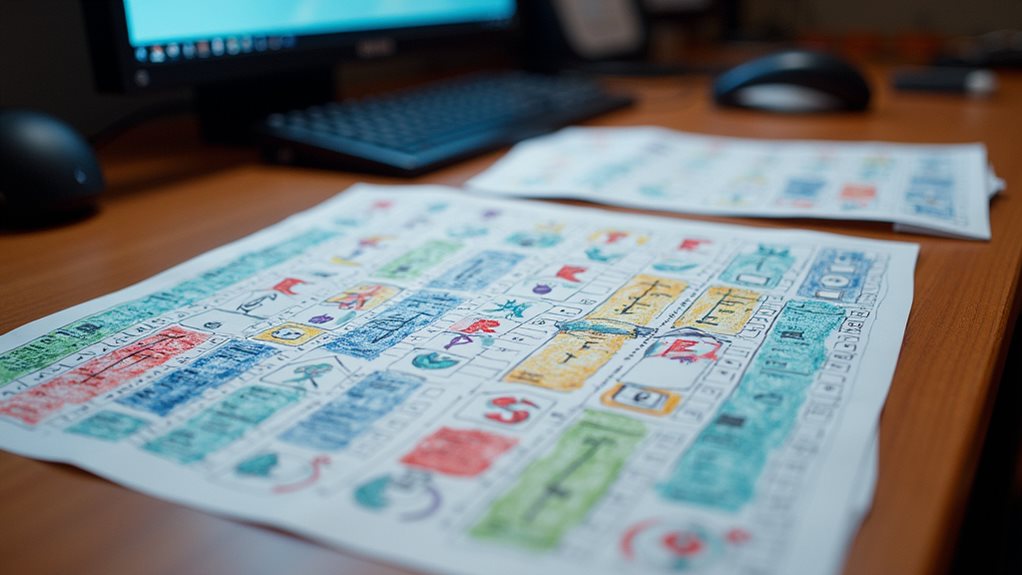
Different civilizations and strategies in Age of Empires II require specific build orders to maximize their strengths and improve overall efficiency. Practicing these build orders through repetition and refinement can significantly enhance execution under pressure. Consider these core points:
- Civ specific strategies, such as unique unit timings, influence the choice of build orders.
- Fast scout or man-at-arms openings optimize early pressure and map control.
- Shift timings between units and age advancements are vital for effective military deployment.
Advanced Resource Management and Expansion Tactics
Effective resource management and expansion play a crucial role in maintaining a strong economy and supporting your military efforts throughout the game. Focus on resource prioritization by assigning villagers efficiently, especially early food gathering. Proper village placement, like building lumber camps close to wood sources and mining camps near gold and stone, guarantees maximum efficiency and steady resource flow. Additionally, understanding the unique Chinese strategies can help you recover from early food deficits and leverage their late-game advantages.
Common Mistakes When Following Build Orders: and How to Avoid Them
Following a build order precisely is essential for a smooth and successful game, but many players make common mistakes that can undermine their strategy before it begins. These include:
- Neglecting villager micro and resource prioritization, causing idle time and inefficient gathering.
- Failing to queue villagers immediately, leading to idle Town Center time exceeding 25 seconds and lost villagers.
- Overbuilding defenses early, disrupting resource flow and delaying economic or military development.
- Ignoring adaptation strategies for when unexpected disruptions occur can leave you vulnerable to raids or early rushes.
Using Build Order Cheat Sheets to Dominate Your Opponents
Using build order cheat sheets allows you to execute strategies with precise timing and resource management, giving you a significant advantage over opponents relying on instinct or memory.
By following specific milestones, such as reaching the Feudal Age at 5:30 with 17 population, and understanding cultural variations, you can optimize timing for upgrades and age progressions.
This approach enhances your chances of victory with accuracy rooted in historical facts.
Frequently Asked Questions
How Can I Adapt Build Orders Against Different Enemy Strategies?
You can adapt build orders by using early scouting to identify enemy strategies, then adjusting with defensive structures like walls or Town Centers, and upgrading units accordingly to counter threats effectively. Flexibility is key for success.
What Are the Key Signs to Switch Build Orders Mid-Game?
You should switch build orders mid-game when economy management struggles, such as resource shortages, or scouting adjustments reveal enemy tactics. Respond promptly by reallocating resources and units to counter threats and maintain map control effectively.
How Do I Customize Build Orders for Specific Civilizations?
You customize build orders by studying civilization-specific strategies, adjusting early economy and military focus, and tailoring build order variations to utilize unique units and technologies, ensuring your approach aligns with each civ’s strengths and weaknesses effectively.
When Is the Optimal Time to Add Extra Town Centers?
You should add extra town centers during early expansion, ideally right after reaching the Castle Age, to optimize resource management and enhance economy. Timing depends on your military strength and map control, ensuring safety and growth.
How Do I Prioritize Resources During Late-Game Transitions?
During late-game shifts, prioritize resource management by focusing on gold for siege units, upgrades, and military production. Use strategic timing to sell excess wood and stone, ensuring a balanced economy that supports sustained military pressure and map control.
GG
Achieving proficiency in build orders in Age of Empires II requires understanding resource management, strategic timing, and efficient shifts between ages. Following a clear plan helps you develop a strong economy, build necessary units, and adapt to different civilizations and strategies. Avoid common mistakes by practicing these routines consistently. Using cheat sheets simplifies complex decisions, enabling you to perform better in matches. Ultimately, disciplined execution of these core principles leads to improved gameplay and increased chances of victory.





3 Comments