
Mayans Guide: Plumed Archers, Fast Castle, and the Archer Boom
The Mayans are one of the best archer civilizations in Age of Empires II: Definitive Edition, built around cheap Foot Archers, a free early resource stockpile, and a unique unit that punishes anyone who tries to out-shoot them. They reward players who like to fast castle, boom on Arabia-style maps, and win with a mass of ranged units backed by economy rather than raw cavalry power.
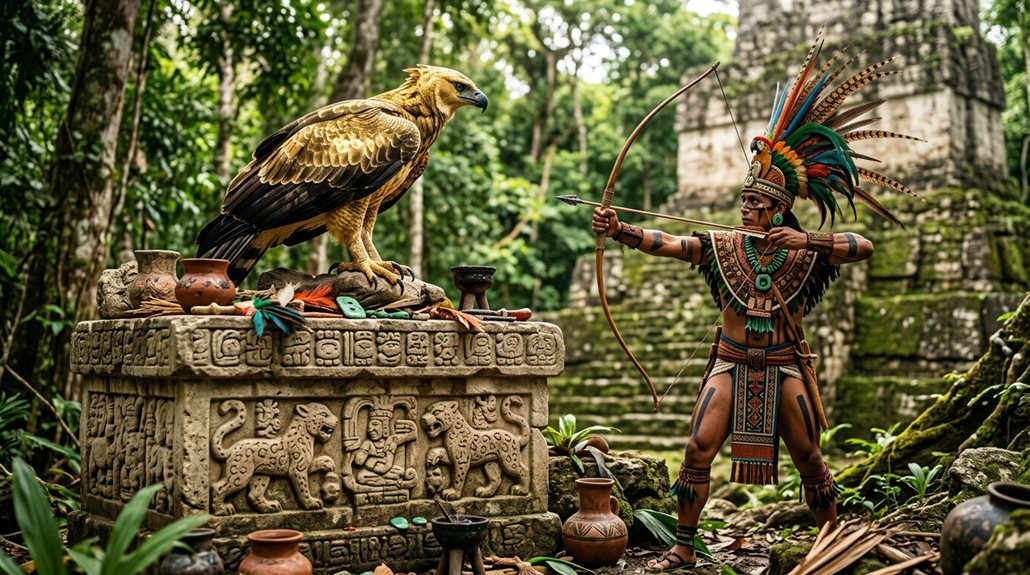
Mayans Civilization Overview
| Category | Bonus |
|---|---|
| Civilization bonus | Start with 1 extra villager and 50 less food |
| Civilization bonus | All resources (except gold) last 15% longer |
| Civilization bonus | Foot Archers cost 10% less in Feudal Age, 20% less in Castle Age, 30% less in Imperial Age |
| Team bonus | Walls cost 50% less for the whole team |
| Unique unit | Plumed Archer (upgrades to Elite Plumed Archer) |
| Unique techs | Holcans (Eagle Warriors +40 HP), Hul’che Javelineers (Skirmishers fire an extra projectile) |
| Civilization type | Archer / Infantry, strong economy, weak late-game cavalry and siege |
Civilization Bonuses Explained
The extra starting villager is the headline bonus. Trading 50 food for a full villager is close to free once you account for the villager’s own food output, so Mayans effectively begin the game a few seconds ahead of everyone else on the Dark Age economy race.
The 15% resource bonus applies to food, wood, and stone (not gold), and it stacks quietly across the whole game. Every sheep, berry bush, and tree yields more before running out, which means fewer villagers spent walking between resources and a real long-game advantage on maps where resources are scarce.
The Foot Archer discount is what makes the Mayans dangerous. Archers, Crossbowmen, Arbalests, Skirmishers, and Elite Skirmishers all cost less wood and gold at every age, so a Mayans player can field a bigger archer army for the same bank than almost any other civilization. This is the core of the “boom into archers” playstyle the civilization is known for.
That gold exception matters in practice. Because the 15% longevity bonus and the archer discount both work around gold rather than through it, Mayans players still need to secure a steady gold income, usually through Trade Carts on team games or a dedicated mining rotation on land maps, to keep upgrading and reinforcing an archer army into the late game.
Why Play Mayans
The case for Mayans comes down to economic consistency and a forgiving path to a strong mid-game army:
- A faster, cheaper start than almost any civilization thanks to the free extra villager.
- An economy that keeps producing efficiently well past the point where other civilizations start running low on nearby resources.
- A cost-efficient path to a large, upgraded archer army without needing a gold-heavy unique unit.
- A unique unit, the Plumed Archer, that is unusually tanky for a ranged unit and does not require an awkward late-game switch to a different composition.
The trade-off is a lack of any strong cavalry or siege bonus, so Mayans players who fall behind on Feudal Age defense or let an opponent reach Knights and Trebuchets uncontested can struggle to catch up. The civilization is built to win by out-economizing and out-shooting an opponent, not by out-fighting them in melee.
Unique Unit: The Plumed Archer

The Plumed Archer is a Castle Age unique unit, available from the Castle, that combines an archer’s range with more health and melee armor than a standard Cavalry Archer. It trades some raw damage for durability, which makes it excellent at soaking hits from Skirmishers and Spearmen while still outranging most melee units. Elite Plumed Archers, unlocked in the Imperial Age, gain even more health and attack, and remain one of the tankier ranged unique units in the game.
Because Plumed Archers benefit from the civilization’s own archer research (Thumb Ring, Parthian Tactics, and the archer armor and attack upgrades all apply), a critical mass of them backed by Skirmishers for anti-archer cover is a strong, self-sufficient army composition that does not require switching to a different unit type as the game goes on.
Unique Technologies
Holcans (Castle Age) gives Eagle Scouts and Eagle Warriors an extra 40 hit points, turning the Mayans’ Eagle Warriors into much sturdier raiders and flank-clearers that can trade well against Skirmishers and even hold their own briefly against Knights.
Hul’che Javelineers (Imperial Age) makes Skirmishers and Elite Skirmishers fire an additional projectile per volley, meaningfully increasing their damage output against enemy archers without changing their cost or speed. Combined with the cheaper Foot Archer line, this tech makes Mayans Skirmishers a serious answer to opposing archer civilizations in the late game.
How to Play Mayans: Strategy and Build Order
The standard Mayans opening is a fast castle build: mine gold early, keep villager production constant, and push to Castle Age as quickly as possible so the archer cost discount and the Plumed Archer come online early. If you are still working out how a fast castle build order actually flows step by step, our Fast Castle build order guide walks through the villager splits and timing in more detail. For a version tuned specifically to this civilization, see our dedicated Mayans archer rush build order.
Once in Castle Age, the priority is a Blacksmith and Market to unlock archer upgrades, followed by a second Town Center and, ideally, a forward Castle to start Plumed Archer production and take advantage of the team wall discount if you are playing with allies. From there, mass Archers or Crossbowmen behind a Skirmisher screen, and transition into Plumed Archers as your Castle comes online.
Mayans are not a one-build civilization, and which opening you choose depends on the map and matchup. If you are unsure whether fast castle is the right call for a given game, our guide on how to choose a build order covers the decision factors. And if an opening falls apart mid-game, whether from a scout rush or a resource miscount, see our piece on what to do when a build order fails rather than panicking and floating resources.
Strategy by Age
Dark Age: Put the free extra villager straight onto food and adjust your sheep or berry count down by one, since the civilization bonus already covers the gap. Scout aggressively; because Mayans give up 50 starting food, you cannot afford to lose early sheep to an opponent’s scout without falling behind on the timing you are trying to protect.
Feudal Age: Most games, you should be moving straight through Feudal Age rather than stopping to build a Feudal army, since the entire point of playing Mayans is reaching the Castle Age discount and the Plumed Archer as fast as possible. A short Feudal stop for a few Archers or Skirmishers is only worth it if you scout an opponent committing to a Feudal Age rush.
Castle Age: This is where the civilization comes online. Get your Blacksmith archer upgrades queued immediately, drop a second Town Center, and start Plumed Archer or Archer production without delay. Every second spent idle here is a second the 20% Castle Age archer discount is not being spent.
Imperial Age: Research Hul’che Javelineers as soon as you can afford it if you expect an archer mirror, since the extra Skirmisher projectile swings prolonged archer fights in your favor. Keep adding Town Centers and villagers behind your army; the 15% resource bonus means a Mayans player who keeps booming in Imperial Age often out-resources an opponent who stopped expanding to mass units.
Practicing the Mayans Opening

The Mayans fast castle rewards repetition more than most builds because the villager-to-resource ratios are tight from the extra starting villager onward. A single misplaced villager in the first two minutes can cost you several seconds of Castle Age timing. Our guide on how to practice build orders has drills for tightening up exactly this kind of early-game consistency, which pays off more with Mayans than with civilizations that have more forgiving bonuses.
Matchups and Best Maps
Mayans are one of the strongest civilizations on open, resource-rich maps like Arabia, where the extra villager, the resource longevity bonus, and cheap archers combine into an economy that consistently out-booms civilizations without an early food or wood bonus. They also do well on hybrid and closed maps where a fast castle into archers and Eagle Warriors can punish slower openings.
Their weak point is a fast, committed cavalry or Man-at-Arms rush before the archer discount and Skirmisher tech kick in. If you expect early aggression, our knight rush guide is useful both for understanding the threat from the other side and for planning your own Spearman and wall timing to survive it. Mayans also struggle in extended archer mirrors against civilizations with better archer-specific bonuses; our breakdown of the archer-heavy Britons vs. Vietnamese matchup covers similar range-and-cost trade-offs that carry over to playing against or as Mayans.
For a sense of how the Mayans’ economy-first identity compares to other bonus-heavy civilizations, see our guides to the Three Kingdoms and the Mapuche, both of which take a different route to a strong mid-game economy. If you are deciding between Mesoamerican civilizations specifically, our Mayans vs. Aztecs breakdown covers how the two compare head to head, and where Mayans and other archer-friendly civilizations stack up more broadly on the most common map, our best civs for Arabia and full civilization tier list are worth checking too.
One practical note for console players: Plumed Archer and Skirmisher micro against enemy archers relies on quick, precise unit selection, which is noticeably harder with a controller than a mouse and keyboard. If you are deciding where to play, our PS5 vs. PC guide covers what changes for input-heavy civilizations like this one.
Frequently Asked Questions
Are Mayans good for beginners? Reasonably. The extra starting villager is forgiving of small early mistakes, and the Foot Archer discount rewards a simple, single-unit-type strategy rather than juggling multiple unit compositions. The main skill requirement is a clean fast castle, which takes practice to execute consistently.
Are Mayans good on Arabia? Yes. Arabia’s open resources let the 15% longevity bonus and the extra villager compound into a real economic lead, and the cheap archer line matches Arabia’s open sightlines well.
What is the best Mayans build order? A standard fast castle into Archers or Crossbowmen, transitioning into Plumed Archers once the Castle is up, covers the large majority of games. See the build order guides linked above for the exact villager counts and timings.
Common Mistakes to Avoid
- Skipping the Blacksmith archer armor upgrades because the units already feel cheap enough, which leaves your archers dying to Skirmishers they should be beating.
- Fast castling without enough Spearmen or a wall to survive an early rush, since the payoff of the archer discount only arrives once you reach Castle Age safely.
- Massing pure Archers or Crossbowmen with no Skirmisher support, which loses badly to any civilization that mirrors your archer count with even a slight cost or damage edge.
- Forgetting Thumb Ring and Parthian Tactics, both of which apply to Plumed Archers and are easy to overlook once the Castle Age transition is underway.
Mayans reward players who can execute a clean early game and then commit to a single, cost-efficient unit composition rather than switching strategies every few minutes. Get the fast castle timing down, keep Skirmishers in every army, and the civilization’s bonuses do most of the work from Castle Age onward.