Franks Vs Lithuanians: Which Cavalry Civ Should You Pick?
If you prefer early-game aggression and heavy, durable cavalry, the Franks are a strong choice because their knights and Eagle Knights excel in melee combat and quick expansion, especially on open maps. Conversely, if you favor versatile units, ranged tactics, and late-game power, Lithuanians suit your style with fast cavalry archers and Paladins enhanced by relics that increase damage or durability. Your choice depends on whether you prioritize early attacks or late-game strength; more details can help determine which strategy best fits your approach.
Scout Report
- Choose Franks for early-game aggression, heavy infantry, and strong cavalry bonuses focused on quick expansion and melee combat.
- Opt Lithuanians for late-game power, versatile ranged cavalry, and economic bonuses supporting sustained, mobile assaults.
- Franks excel on open, flat maps with early cavalry, while Lithuanians perform better in forested or mountainous terrains.
- Prioritize relic control: Frankish relics boost durability; Lithuanian relics enhance cavalry attack damage.
- Select Franks for aggressive early tactics; pick Lithuanians for strategic flexibility and late-game dominance.
Who Were the Franks and Lithuanians, and What Are Their Strengths?

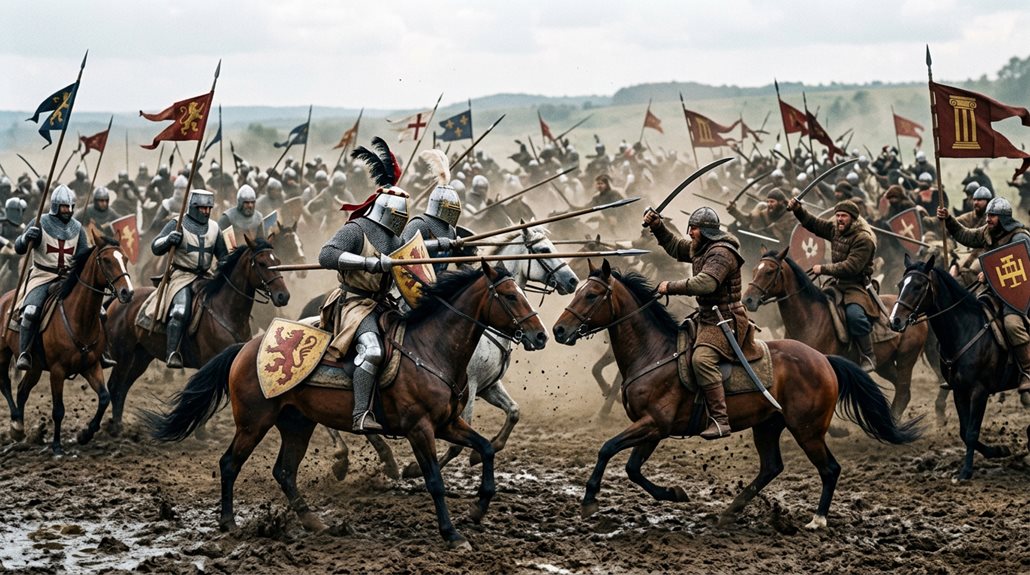
The Franks and Lithuanians were two different groups of people from different parts of Europe, each with unique strengths that influenced their military capabilities. Their cultural influences shaped their societies—Frankish heavy infantry with armor and knights, and Lithuanian light cavalry known for mobility. Their historical significance lies in shaping medieval European history through their military and political actions. A deeper understanding of their unique military units reveals how their distinct strategies contributed to their enduring legacies.
How Do Frankish Heavy Knights Compare to Lithuanian Light Cavalry?
When comparing Frankish heavy knights to Lithuanian light cavalry, you notice that their differences in armor, weapons, and mobility significantly influence their roles in battle.
- Heavy knights have high armor penetration resistance and excel in cavalry formations for breakthroughs.
- Light cavalry, with superior speed, relies on ranged attacks and evasive tactics, disrupting enemy lines.
- Their armor and mobility differences determine their effectiveness in different tactical scenarios.
- Understanding the unit roles and their unique strengths helps players optimize their strategies in various matchups.
How Do Their Tech Trees Influence Cavalry Strategies?
The tech trees of the Franks and Lithuanians greatly influence their cavalry strategies, as the Franks focus on heavy, armor-enhanced units like Paladins and Eagle Knights.
Meanwhile, the Lithuanians emphasize ranged units such as Cavalry Archers and Elite Cavalry Archers. These differences shape how each civilization uses resources and upgrades.
The Franks support siege-heavy and late-game Paladin tactics, while the Lithuanians favor ranged cavalry playstyles that rely on speed and attack bonuses.
Ultimately, the choice of tech trees determines whether your strategy will center on powerful melee cavalry or fast, ranged units that can attack from a distance. Additionally, understanding the tech tree can help you optimize your upgrades and unit composition for each civilization.
Tech Diversity Shapes Tactics
Tech trees are fundamental in shaping the strategies you use with cavalry units, as they determine the strengths and weaknesses of each civilization’s military options.
- Frank techs emphasize ballista ranged cavalry, influenced by their cultural focus on ranged combat and strategic resource allocation.
- Lithuanians favor mounted archers, reflecting their cultural adaptability and economic impacts that support flexible, mobile tactics.
These tech variations influence mid- and late-game tactics, shaping the overall strategic approach based on cultural and economic factors.
Late-Game Unit Focus
Cavalry strategies in the late game are strongly shaped by each civilization’s technological advantages and focus areas.
Franks emphasize speed and mobility, with upgrades that improve cavalry armor and unit morale. This allows for quick raids and effective hit point management.
Lithuanians focus on durability, gaining access to heavy cavalry with enhanced armor and morale. This makes them ideal for sustained frontal assaults.
Resource and Upgrade Synergy
Because resource allocation and upgrade choices are closely linked, understanding how each civilization’s technology tree influences cavalry strategies is essential for effective gameplay.
- Both civilizations prioritize Protoknight upgrades, enhancing economic efficiency and unit durability.
- Frankish tech emphasizes cheap knight upgrades, supporting early cavalry surges.
- Lithuanian tech also focuses on resource harmony with Protoknight cards, optimizing upgrade timing for sustained cavalry strength.
What Do Relic Bonuses Do for Cavalry Power in Both Civilizations?

Relic bonuses considerably impact the combat strength of Lithuanian cavalry by providing attack upgrades when relics are garrisoned in the castle, with a maximum increase of +4 attack points after four relics are assigned. In contrast, the Franks don’t gain attack benefits from relics but instead rely on increased health, with their knights receiving a +20% HP bonus that improves their durability over time. Understanding how these bonuses influence cavalry performance helps clarify each civilization’s strengths in different combat scenarios. Additionally, the Feral Interactive port for macOS ensures that players on Mac can experience these unique civilization strengths seamlessly.
Frankish Damage Boosts
The bonuses provided by relics can substantially influence the effectiveness of cavalry units in the game, particularly for the Franks.
- Their relics don’t increase attack, but they elevate cavalry HP, enhancing cavalry armor and unit morale.
- This increased survivability allows cavalry to stay longer in fights, maintaining strength against melee and ranged units.
- The focus on durability makes Frankish cavalry more resilient, especially in prolonged battles.
Lithuanian Attack Enhancements
Relics play an essential role in enhancing the attack power of Lithuanian cavalry units, especially for those in the Knight line and Leitis. Each relic grants +1 attack, with a maximum bonus of +4, directly improving cavalry formation and effectiveness. Proper relic control is vital to maximize damage, as relic bonuses do not stack with other attack modifiers.
| Number of relics | Attack bonus | Effect on cavalry units |
|---|---|---|
| 1 | +1 | Slight increase in damage |
| 2 | +2 | Improved kill speed |
| 4 (max) | +4 | Maximum attack bonus |
Why Do Lithuanian Paladins Excel in the Late Game?
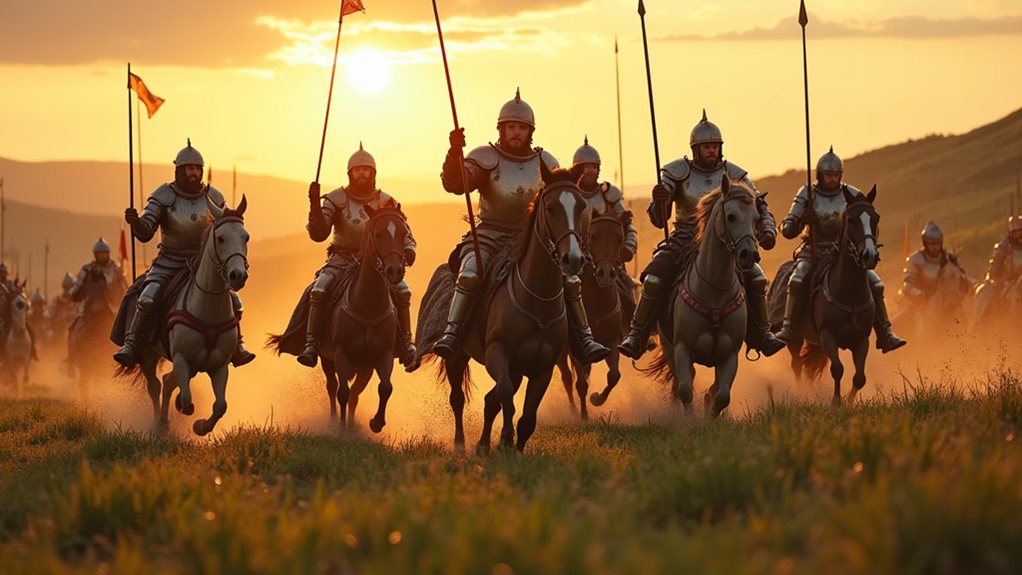
Lithuanian Paladins excel in the late game because their attack strength is markedly amplified by collecting relics, which grant additional attack points specifically to cavalry units like Paladins.
- Relic collection increases attack points, increasing damage against armored and unarmored targets.
- The relic bonus applies exclusively to cavalry, enhancing their effectiveness in combat.
- Cavalry armor and relic collaboration allow Paladins to dominate late-game battles efficiently.
- Additionally, relics contribute to cavalry attack strength, further boosting Paladins’ combat potential during critical engagements.
Which Civilization Is More Flexible for Different Playstyles?
Both the Franks and Lithuanians show different levels of flexibility depending on your chosen playstyle, map type, and strategic goals.
The Franks excel in versatility through their strong tech tree and ability to produce line cavalry quickly, making them adaptable to various situations.
Meanwhile, Lithuanians are more suited for aggressive archery strategies and benefit from unique towers and upgrades that enhance their options.
However, they may require specific map conditions to maximize their strengths. Additionally, understanding the map type is crucial, as certain civs perform better on open or mixed terrains compared to enclosed maps.
Adaptability to Map Types
When considering which civilization is more adaptable to different map types, it becomes clear that each has strengths suited to specific terrains. But overall, some civilizations demonstrate greater flexibility across varied environments.
- Franks excel on open and island maps through early Cavalry countermeasures and strong economic upgrades. These advantages enable rapid map control.
- Lithuanians perform well in forested and mountainous terrains, using Paladins to steer through dense cover efficiently.
- Mixed terrain favors Franks for early pressure, while Lithuanians benefit from their food bonus for faster Feudal access across maps.
Tech Tree Versatility
The versatility of a civilization’s tech tree determines how flexible it’s to different playstyles and strategies throughout a game.
Franks focus on military innovation through strong cavalry bonuses, but lack early archer armor upgrades, limiting adaptation.
Lithuanians have a balanced tech tree, supporting diverse strategies with early herbal medicine and strong archer and tower bonuses, enhancing economic development and overall flexibility.
Playstyle Customization
The flexibility of a civilization’s playstyle can considerably influence how it performs in different types of games and strategic situations.
- Franks support diverse strategies with strong early cavalry, enhancing economic development and cultural influence through fast unit production.
- Lithuanians focus on late-game Paladins and Hussars, offering adaptability for various armies while emphasizing economic growth.
- Both civilizations can adapt to different maps and scenarios, but Franks excel in early aggression, while Lithuanians are better for late-game versatility.
What Are the Best Early-Game Strategies for Franks and Lithuanians?
Starting strong in the early game is essential for both Franks and Lithuanians, but each civilization has different priorities and strategies that can give you an advantage. Focus on battlefield positioning to control key areas and manage resources efficiently by continuously producing villagers, gathering passive food sources, and prioritizing food and gold. Quick progression to Feudal Age set the stage for effective cavalry tactics. Additionally, understanding the importance of resource management can help you optimize your economy and stay ahead in the game.
Which Maps Favor Frankish or Lithuanian Cavalry Tactics?
Certain map features can considerably influence whether Frankish or Lithuanian cavalry tactics are more effective.
- Flat terrain favors both civs by maximizing cavalry speed, momentum, and impact, making open plains ideal for maneuvering and charges.
- Large maps with low infantry density benefit both, providing space for cavalry to exploit terrain advantages.
- Dense forests favor Frankish cavalry, reducing Lithuanian mobility, while river networks and high ground benefit Lithuanians through enhanced advantage and efficiency.
- The quality of online multiplayer connections can also impact cavalry maneuvers, as lag or high ping may hinder quick responses and precise timing in battles.
What Are the Pros and Cons of Frankish Versatility Versus Lithuanian Power Spikes?
Understanding the strengths and weaknesses of Frankish versatility compared to Lithuanian power spikes can help you decide which cavalry civilization is better suited for your playstyle. Frankish cavalry excels in adaptable cavalry formation and maintaining unit morale across different tactics, while Lithuanians dominate late-game with powerful heavy cavalry and strong power spikes. Additionally, knowing when to implement fast castle timings can significantly influence the effectiveness of each civilization’s strengths.
Which Cavalry Civilization Fits Your Playstyle? Final Tips and Recommendations
Choosing between the Frankish and Lithuanian civilizations depends largely on your playstyle and strategic priorities.
- If you prefer early aggression with high unit mobility and economic advantages like fast start food and free stone throwing, the Franks are suitable.
- For late-game strength with relic bonuses, focusing on unit specialization and tech efficiency, Lithuanians are better.
- Consider map type—open maps favor Franks, while closed maps benefit Lithuanians.
GG
Choosing between Franks and Lithuanians depends on your preferred playstyle and the game situation. Franks excel with versatile heavy knights suitable for early and mid-game attacks, while Lithuanians have powerful late-game Paladins and strong cavalry bonuses. Consider map types and your strategic goals, as Franks offer consistent strength and Lithuanians provide late-game dominance. Selecting the right civilization aligns with your tactics, whether you prioritize early aggression or late-game power, ensuring you maximize your strengths effectively.