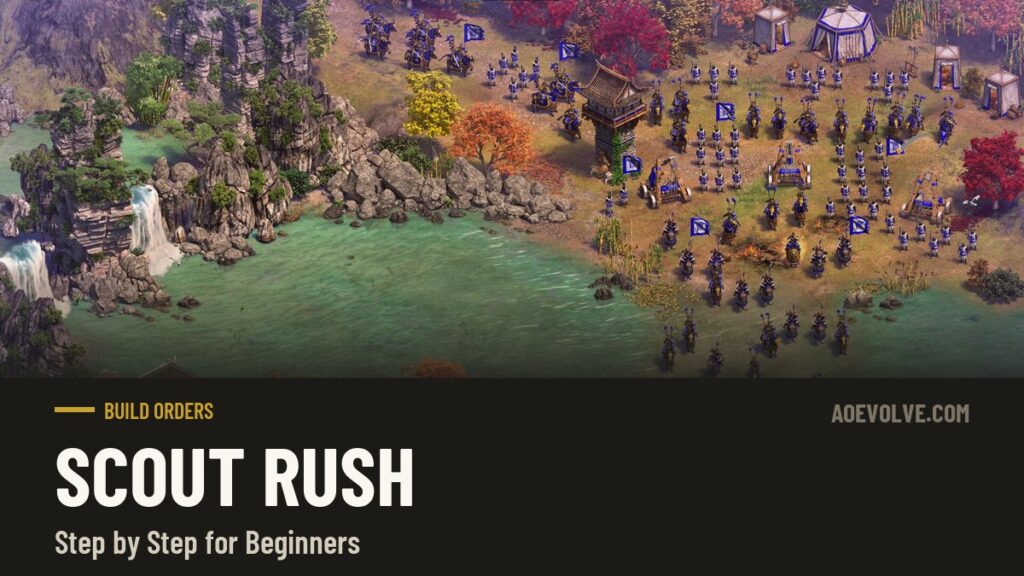
To execute the Franks Knight Rush build order, start by gathering sheep and boars in the Dark Age while producing villagers continuously. Once you reach 16-18 villagers, advance to Feudal Age, while prioritizing farms, wood, and gold collection, and assign approximately 6-8 villagers to food early and 3-4 to gold. Build a stable near your base’s edge, then research key cavalry upgrades like Bloodlines and Chivalry before launching a timed attack with your first knights around 17-19 minutes, with a focus on fielding knights in numbers and pressing the enemy economy. Continuing with targeted tactics and proper resource management will maximize your chances of success.
Scout Report
- Prioritize quick villager production and efficient resource gathering from sheep, boars, and farms during Dark and Feudal Ages.
- Advance to Castle Age around 16-18 minutes, balancing gold and wood collection for stable and upgrade timing.
- Build stables near the edge of your base early, and produce Knights continuously once the stable is ready.
- Research key upgrades like Bloodlines and Chivalry at optimal times to maximize knight effectiveness.
- Launch your attack with your first knights around 17-19 minutes, using scouting to identify weak points before you commit.
What Is the Franks Knight Rush? – Fundamentals and How to Start
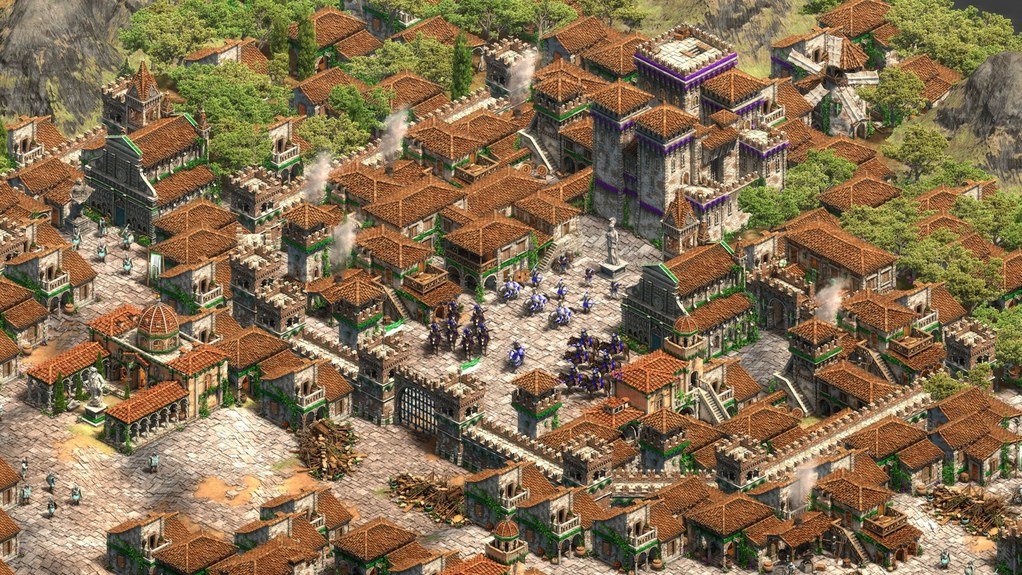
The Franks Knight Rush is a specific strategy used in Age of Empires II that focuses on quickly producing and deploying knights to gain early control over the opponent. It’s rooted in medieval warfare tactics, emphasizing fast mobility and aggressive engagement. This approach relies on effective economic strategies, including quick villager production and resource management, to outpace opponents before they develop defensive structures. Additionally, mastering the cavalry civilization can provide significant advantages in executing this strategy effectively.
How to Set Up a Fast and Efficient Dark Age Economy
Setting up a fast and efficient Dark Age economy begins with careful placement of your initial villagers and immediate actions to gather food, which is essential for maintaining a steady flow of production. Focus on resource allocation by assigning villagers to sheep, boars, and farms near the town center, while strategically placing your village to minimize travel time and maximize resource collection. Additionally, understanding build order timing and adjusting your opening based on civ matchups and map type can give you an early advantage.
How to Transition Smoothly From Dark Age to Feudal Age
Shifting smoothly from the Dark Age to the Feudal Age requires careful planning and precise timing to help your economy remain strong and your military options open. Make use of terrain advantages to position villagers efficiently and build structures strategically. Prioritize economic upgrades early, such as wood and food, to reach the critical resource thresholds of 500 food and 100 wood efficiently, ensuring a seamless progression. Consistent practice and execution are key to mastering these transitions under pressure, helping you execute build orders reliably during actual matches.
How to Manage Villagers and Resources for Constant Knight Production
Managing villagers and resources effectively is essential for maintaining constant Knight production in your economy. Proper resource allocation involves assigning about 18 villagers to food sources and 12-15 to gold, considering eco upgrades. A well-structured build order ensures that your economy remains balanced and responsive to battlefield demands. Villager distribution should balance farm maintenance, wood gathering, and resource saturation limits. This balance ensures continuous production without resource shortages or inefficiencies.
How to Build and Upgrade Stables for Max Efficiency
Building and upgrading stables effectively is key to maintaining a steady stream of knights during a rush. Focus on stable placement near the edge of your base to reduce travel time, positioning them adjacent to the Town Center or drop-off points for quick deployment. Make certain stables are on flat terrain, avoiding forested areas, to prevent unit speed penalties and maximize efficiency. Incorporate unique units into your build order to gain an advantage against opponents.
When and How to Advance Quickly to Castle Age
To advance quickly to Castle Age, you should aim to do so immediately after reaching Feudal Age with 22-24 villagers, ensuring your resource collection is optimized for this progression. It’s important to continuously queue villagers during Feudal Age to maintain a steady increase in resources, especially gold and wood, which are necessary for the upgrade and supporting your economy. Timing the upgrade at around 50% completion of Feudal Age research allows you to minimize total upgrade time and start your knight production on schedule. Monitoring your control layout can also help streamline your transition to Castle Age by allowing faster access to key units and upgrades.
Timing for Age Advancement
When is the best time to advance to the Castle Age during a Knight Rush, and how can you do it quickly and efficiently? Typically, you should aim for 16-18 minutes, balancing resource collection and villager allocation.
- Prioritize gold and wood for rapid infrastructure development.
- Reassign villagers from wood to gold once farms are established.
- Complete essential upgrades like Horse Collar before advancing.
This approach keeps your food and gold gathering on schedule so the Castle Age timing stays on track.
Efficient Resource Management
Understanding when and how to advance quickly to the Castle Age is essential for executing an efficient Knight Rush.
Focus on maximizing resources by prioritizing early wood gathering for lumber camps, assigning villagers to gold, and collecting boar food before herdable animals deplete.
Balance resource trading and avoid unnecessary research like Loom unless castle defenses or resource lines are threatened.
The Key Upgrades for Frankish Knights: Bloodlines, Chain Barding Armor, and Chivalry
Upgrading Frankish knights with Bloodlines, Chain Barding Armor, and Chivalry directly improves their durability and combat effectiveness, making them more resilient in battle. Timing these upgrades correctly helps you maximize their benefits, with Bloodlines increasing overall health for longer survivability, Chain Barding Armor adding melee armor, and Chivalry making Stables work 40% faster. Properly sequencing these research priorities is essential to maintain pressure and prevent early losses during your knight rush strategy. Additionally, understanding the upgrade sequence ensures that your knights remain competitive against various enemy units and strategies.
Upgrading Knight Durability
Have you ever wondered how to make your Frankish knights more durable during a rush? Upgrading knight durability involves three key steps:
- Research Bloodlines for +20 health to improve Knight survivability against ranged attacks.
- Invest in Chain Barding Armor to add melee armor, essential for cavalry survivability.
- Research Chivalry to make Stables work 40% faster, keeping knights flowing into the fight without delay.
Enhancing Combat Effectiveness
To make your Frankish knights more effective in combat, it’s important to focus on three key upgrades: Bloodlines, Chain Barding Armor, and Chivalry.
These upgrades improve medieval armor, increasing health and damage resistance.
Bloodlines enhances survivability, Chain Barding Armor reduces incoming melee damage, and Chivalry makes Stables work 40% faster.
All of these upgrades work together to enhance cavalry tactics and make your knights more resilient in battle.
Timing of Research Priorities
Timing your research priorities for Frankish knights is essential to maximizing their effectiveness in battle, especially in relation to the three key upgrades: Bloodlines, Chain Barding Armor, and Chivalry.
- Prioritize Bloodlines after blacksmith upgrades for increased health.
- Research Chain Barding Armor before reaching the Imperial Age to improve melee defense.
- Begin Chivalry in the Castle Age so Stables work 40% faster and knight production stays ahead.
How to Use Your Knights for Harassment and Disruption
Using your knights for harassment and disruption relies on quick, strategic movements that target key enemy resources and weaken their economy before they can organize a strong defense. Focus on attacking food sources and lumber, avoiding heavy infantry. Use speed to pressure enemy villagers, distract horse archers, and keep siege weapons unprotected, forcing the opponent to allocate resources defensively. Additionally, understanding the optimal timing for your attack can maximize the impact and minimize the risk of counterattacks, especially if you capitalize on fast castle strategies.
Countering Common Enemy Defenses Against the Knight Rush
When faced with common enemy defenses against the knight rush, it’s important to understand how to counter them effectively by using specific units and tactics.
- Use spearmen and light cavalry to counter enemy archers, preventing their damage bonus and flanking villagers.
- Keep vision on enemy archers and intercept them before they reach the front line.
- Build rams in groups to breach castle walls safely, avoiding direct knight attacks.
- Timing your transition to the imperial age can also help you leverage faster upgrades and pressure opponents before they can fully reinforce their defenses, especially when utilizing a fast imperial build order.
Common Mistakes to Avoid During Your Frankish Knight Rush
One of the most common mistakes during a Frankish knight rush is neglecting early resource allocation, which can delay progress and weaken your attack.
Poor village placement and resource prioritization, such as failing to assign villagers to sheep or build mining camps promptly, lead to idle time and shortages.
Balancing these tasks early helps you achieve a smoother shift and stronger offensive pressure.
Timing Your Attack for Maximum Impact
Timing your attack is vital for maximizing its effectiveness, and you should aim to strike when your knights are at their strongest, which is typically around 17-19 minutes into the game.
To do this, you need to carefully monitor your resources, ensuring you have about 600 food and 750 gold to produce a group of 10 Knights.
Additionally, confirm that your military upgrades like Bloodlines and Chivalry are completed at the right moments.
Furthermore, scouting enemy movements early will help you identify their vulnerable points, such as weak defenses or outdated units.
This information allows you to plan your assault when they’re least prepared.
Optimal Attack Timing
Achieving maximum impact from a knight rush requires carefully selecting the most advantageous moment to launch your attack, which is typically between 17:00 and 19:00 minutes into the game.
Focus on:
- Timing attacks before enemy defenses and economic upgrades are fully developed.
- Prioritizing siege tactics and destroying key economic buildings like mills and houses.
- Exploiting the critical window to disrupt enemy resource stockpiles and delay their castle age.
Scout Enemy Movements
Understanding enemy movements through scouting provides vital information that can help you time your knight rush for maximum effectiveness.
By observing their base layout, resource patches, and defensive structures, you can identify vulnerabilities for siege tactics.
Monitoring villager counts and military deployments also helps maintain economic balance while preparing your attack at the best moment.
Resource Readiness
Have you prepared your resources carefully to make certain your knight rush is as effective as possible? Proper resource allocation and economic development are essential for timing your attack.
- Make sure 6-8 villagers gather food before 5:00 for a stable timeline.
- Send 3 villagers to gold early to support military upgrades.
- Maintain 10-12 villagers on resources by 8:00 to balance economy and military needs.
Tips to Refine Your Frankish Knight Rush and Improve Your Win Rate
Refining your Frankish Knight rush involves carefully optimizing each stage of your build order to maximize efficiency and effectiveness.
In medieval warfare, resource prioritization is vital; you should allocate villagers to sheep early, then shift focus to gold and berries strategically.
Streamlining age-up timing, accelerating stable and blacksmith construction, and executing precise harassment all improve your win rate.
Final Tips and Next Steps for Mastering the Frankish Knight Strategy
To excel in the Frankish Knight strategy, you need to focus on precise execution and careful planning during each game phase.
- Prioritize siege tactics and timing to break enemy defenses effectively.
- Invest in economic upgrades early, such as wheelbarrow, to support sustained knight production.
- Monitor resource allocation closely, ensuring a balance between military units and economic growth for consistent pressure and expansion.
FAQ
This FAQ covers the Franks knight rush, its timing and the upgrades that matter.
What is the timing for the Franks knight rush?
Advance to Castle Age around 16 to 18 minutes, then push with your first knights around 17 to 19 minutes. The key is producing knights nonstop from the moment the stable is up.
Which upgrades matter most for the knights?
Bloodlines first for +20 hit points, then Chain Barding Armor and Forging as the fight allows. The Frank unique tech Chivalry makes stables work 40% faster, which speeds up replacement knights.
Why are the Franks the best knight rush civilization?
Their cavalry get +20% hit points from Feudal Age, their farms and forage economy support constant knight production, and their Castles are cheaper for a mid-game follow-up.
How do I stop a Frank knight rush?
Pikemen and camels counter knights directly, monks convert the expensive units, and walls around gold and woodlines force the knights to pay for every raid.