In Arena, you start with a 26+2 fast castle plan to reach Castle Age quickly while maintaining steady eco, then pivot to your chosen unique unit. Begin by gathering sheep, wood, and berries, walling edges to deter early pressure, and using a Market and Blacksmith in Feudal to tech up. As soon as you hit Castle Age, shift into your civ’s unique units and efficient production, timing upgrades with relic control and map pressure. If you keep this path, you’ll uncover more strategies ahead.
Takeaways
- Start with a Dark Age eco focus (sheep, berries, wood) and walling, aiming for a steady transition to Feudal with no early military.
- Feudal Age: build Blacksmith and Market; preserve villager flow to prepare for a Castle Age click at 28 population.
- Castle Age: prioritize relic control, monk support, and map presence; shift to civ-specific techs as you hit Castle Age.
- Transition to 3 TCs after Castle Age to boost economy, allocating wood/stone for town centers while maintaining defenses.
- Post-Castle: quickly transition into your chosen unique units, using civ strengths (e.g., Bohemians or Turks) with timing to pressure or defend.
Why Arena plays differently from Arabia
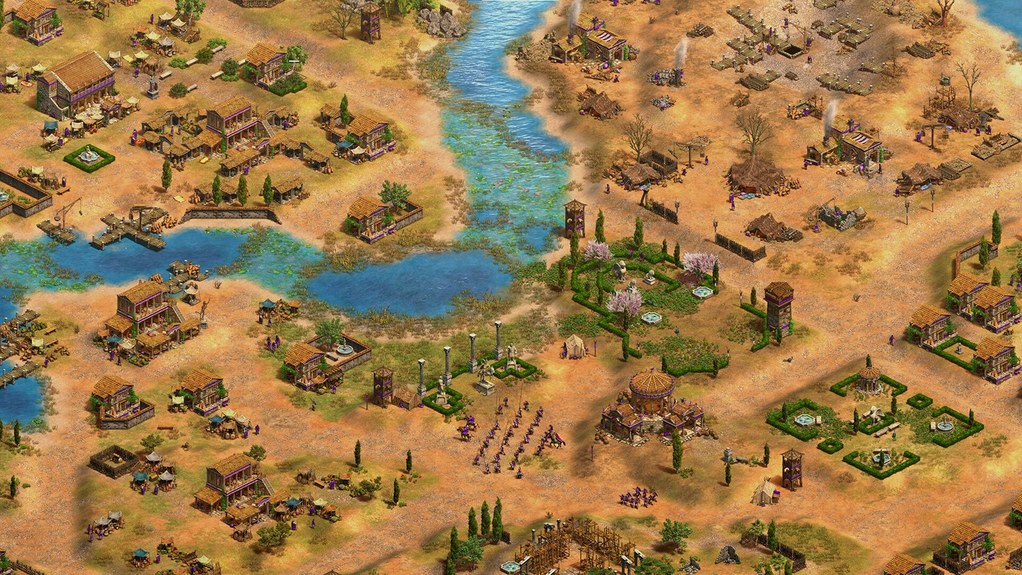
Arena plays differently from Arabia because the closed Arena map favors relic control and early monk pressure, which shifts the game toward map control and resource timing rather than early infantry skirmishes. You’ll see players prioritize relic grabs and defensive plays, using monks to convert and reinforce while walling edges to prevent cheese. This pattern makes efficient villager distribution and precise aging timings essential, since the Castle Age window often defines the outcome.
| Relic control and monks | Defensive meta and walls |
|---|---|
| Relic control becomes a central objective, guiding your play and influencing where you place monks and patrolling lines. | Building walls and securing map edges reduces early pressure, making timing defenses and rock-solid eco management vital. |
| Monk strategy can swing games by converting pivotal targets and supporting ranged or siege pushes in Castle Age. | A strong defense against monk pushes and tower attempts requires coordinated use of walls, archers, and fast upgrades to withstand pressure. |
| Monks also enable flexible shifts into mid-game skirmishes or forward expansions, shaping pacing and control. | The defensive stance reshapes villager allocation and resource timing, prioritizing stability over aggressive expansions. |
Closed walls, relic control and the monk and defensive meta
Closed walls shape how control and timing work in Arena, since the map’s double-layered defenses mean you won’t see early skirmishes like in Arabia.
Relic strategy guides your timing, as monks collect relics for gold and map presence.
Walling the map edges creates secure lines, while you prioritize relics, defend against pressure, and coordinate monk and defensive play to secure Castle Age.
The standard Arena fast castle: 26+2
You follow the standard Arena fast castle, 26+2, starting with Dark Age allocation that prioritizes sheep, berries, wood, boar, and walling to secure your base, then move into Feudal Age with no military, while timing the market and Blacksmith to facilitate the shift. In Castle Age, you aim for the 28 population Castle click and first units, while keeping the villager flow tight across each resource: steady sheep and berries, precise wood for houses and techs, and saved stone for the castle drop, with the market enabling food and gold adjustments as needed. For the generic version of this opening, see our fast castle build order; once you reach Castle Age, the boom build order shows how to spend the advantage. If you are playing Bohemians, the Bohemians guide covers the monk and Hussite Wagon follow-ups.
| Role / Stage | Key Focus / Allocation |
|---|---|
| Dark Age (0-8) | 1-6 sheep, 7-10 wood, 11 first boar, 12-15 berries, 16 second boar, 17-18 boar and sheep under TC |
| Feudal Age (26 pop) | 19-20 wood (total 6), 21-23 stone (for castle drop), 24-25 gold; build 2 houses, Blacksmith, Market, research Double-Bit Axe and Horse Collar |
| Shift to Castle | Click Feudal to Castle at 28 pop; maintain steady villager production and begin preparing for Castle drop |
| Castle Age (post-click) | Fast castle into a unique unit or alternative plan (3TC boom or monk+siege) depending on civ; use stone saved for castle drop |
| Resources & Timing | Feudal click timing around 26 pop, Castle click at 28 pop; use the market to smooth transitions and adjust food/gold as needed |
Dark Age allocation: sheep, berries, wood, boar and walling
To begin the Dark Age in the standard Arena fast castle, you allocate villagers to collect sheep first for steady food. Then shift to berries to sustain production as you add wood for buildings, keeping a steady flow of villagers to maintain momentum toward Feudal.
This approach outlines precise villager timing and changes for early eco stability.
Feudal Age on Arena: no military, market and Blacksmith timing
Feudal Age on Arena begins with a focused, zero-military shift that employs a zero-military shift in your eco plan rather than combat. You prepare a Market to smooth changes, build Blacksmith, then advance to feudal age for a fast castle.
Feudal age timing relies on precise villager shifts: two houses, early wood, berry and deer as food, then gold to Castle.
Fast castle remains central.
Castle Age click timing and first units
Castle Age click timing and first units on Arena follow the standard 26+2 fast castle, with the timing anchored by your gold and castle drop plan.
- At Castle click, send your newest villagers to gold and queue a first set of melee units or a monk push, depending on your build.
- Prepare for a single, efficient castle drop.
- Monitor relics and map control to keep timing consistency.
Fast Castle into unique unit
Fast Castle into a unique unit works best with civs like Bohemians, Turks, Spanish, Koreans and Britons, each with a distinct post-Castle plan.
Each civ offers a distinct path after hitting Castle Age, whether it’s early unique units, complementary techs, or support from a build that preserves eco efficiency.
We’ll examine how the standard 26+2 timing supports these shifts and what villager allocations or timing tweaks help optimize the move to a unique unit push.
Bohemians, Turks, Spanish, Koreans and Britons examples
Bohemians, Turks, Spanish, Koreans, and Britons each have a distinct path after hitting Castle Age when playing Arena, and the fast castle into a unique unit approach capitalizes on their strengths to pressure from a mid-game timing window.
1) Bohemians exploit faster production;
2) Turks amplify gold efficiency for a quick siege unit;
3) Spanish pressure with rams and monks while expanding.
Fast Castle into 3 Town Center boom
In Arena, you must decide when to boom versus push, since a fast Castle into 3 Town Center boom changes your timing and resource priorities from military pressure to a defensive economic expansion.
With a standard 26+2 Feudal timing and 27 villagers to hit Castle, you shift to building three Town Centers as soon as you reach Castle Age, provided you have enough wood and stone and can defend against nearby relic collection and monk pressure.
The switch point depends on your villager allocation, mining and wood lines: boom when you can defend the new Town Centers, push when your civ(?:’|\u2019|\\’)s unique unit timing is stronger.
When to boom instead of pushing
Choosing to boom instead of pushing in Fast Castle into a 3 Town Center boom depends on how the game state looks and what your opponent can do.
- Assess relics, map control, and potential early monk or tower pressure before committing to a heavy boom.
- If you can secure villagers safely with minimal scouting risk, prioritize the 3 TC plan.
- Avoid overcommitting when Feudal timing or castle threats are uncertain.
Arena strategy beyond the build
Relics and monks shift Arena games from pure resource timing to map control, so you should plan to collect relics early, pick a monk-forward approach when feasible, and use monks to pressure enemy positions or defend your own TC.
Map control comes through careful walling, patrols, and timing to deny your opponent’s monk or raid attempts while you utilize relics for gold and military support.
A forward castle can pressure space and create opportunities to control relics, while the choice of a monk or siege push can define how quickly you convert map advantage into a decisive lead. For civ strength comparisons, see the AOE2 civilization tier list.
Relics, monks, map control and the forward castle
Relics play a central role in Arena strategy, influencing both timing and unit choices as you shift from Feudal to Castle. You’ll utilize relics and monks to pressure the map, expand control, and slow enemy income.
Focus on forward castle presence, walling key edges, and defense.
- Track relic timing and monk production
- Secure map control with villagers and monks
- Push forward castle for decisive pressure
Dealing with Arena cheese
You can counter Arena cheese by recognizing three common threats: a monk rush, a rapid 25-minute boom, and tower pressure that targets your resources.
Prepare your response by keeping relic sites under control, maintaining map awareness for enemy monks, and choosing the right mix of units to deter an early monk push or tower assault.
Monk rush, the 25-minute boom and tower rush defence
Monk rushes on Arena are a common response to the map’s fixed walls and slow early fights, and they can threaten a fast castle plan if not prepared.
1) Prepare gold early, shift villagers to monks, and use relics to pressure a late game.
2) Wall edges, defend forward towers, and protect your eco.
3) Scout for monk timing, adapt to pressure, and maintain steady gold income.
More build orders: Aztecs men-at-arms, Persians fast castle and Britons archer rush.
FAQ
This FAQ covers the standard Arena fast castle, the market question, walling, and how to defend against monk rushes and fast castle pushes.
What is the standard villager count for an Arena fast castle?
1) In Arena, you follow the 26+2 fast castle plan, with precise villager allocation to enable a quick Castle age.
2) The typical distribution focuses on food and wood first, then gold and stone for a castle drop.
3) Track Feudal and Castle-click timings to keep the transition smooth, efficient and predictable.
Do I need a market on Arena?
On Arena, a market isn’t strictly required, but it can be highly beneficial depending on your plan.
A market smooths food and gold through trades, aiding shifts to fast castle into unique unit.
It accelerates timing, enables early gold for a monk or siege, and helps handle resource gaps without delaying your Castle Age.
How many houses and what walling before Castle Age?
In Arena, you should aim to finish your walling and housing plan before hitting Castle Age, with a practical target of two houses built early and enough walls to secure your base from any early pressure.
- Build two houses early to avoid population caps during Feudal.
- Wall gaps at key angles to deter quick rushes.
- Allocate initial wood for walls and later houses to maintain steady progress.
Fast Castle into unique unit or 3 Town Center boom: how to choose?
Choosing between Fast Castle into a unique unit and a 3 Town Center boom depends on the match-up, map control, and your long-term goals.
In fast castle, you commit to timing pressure with a castle drop and specific eco shifts.
For a 3 TC boom, you prioritize eco growth and border defense.
Consider relics, monk support, and opponent tendencies to decide.
How do I stop a monk rush or fast castle push behind my walls?
Monks and fast castle pushes are common threats on Arena, but you can counter them with targeted defenses and timing control. Stay alert to villager shifts, wall gaps, and relic timing.
- Build additional walls and watchtowers to deny monk rush routes.
- Scout early to detect a fast castle push and respond with timely aging and eco adjustments.
- Shift to counter-units or monk denial if relics favor the opponent.