When your build order fails in AOE2, you need to quickly identify resource bottlenecks such as food, wood, or gold shortages that stop villager or unit production. Reassign villagers efficiently to key resources and fix shortages by building near resource nodes or expanding infrastructure. Make immediate adjustments, like constructing defenses or strategic buildings, to respond to threats or stalls. Focus on reproducing units and managing your economy to stay competitive. Continuing to follow strategies carefully helps prevent future failures and strengthens your game plan.
Scout Report
- Identify resource bottlenecks and adjust your build order to prioritize essential resources.
- Reassign villagers efficiently to stabilize resource income and recover from shortages.
- Construct strategic buildings near key resource nodes for better resource gathering.
- Reproduce units quickly to maintain offensive pressure and prevent economic stagnation.
- Continuously monitor resources and adapt your strategy to prevent future build order failures.
Recognize When Your Build Order Has Failed
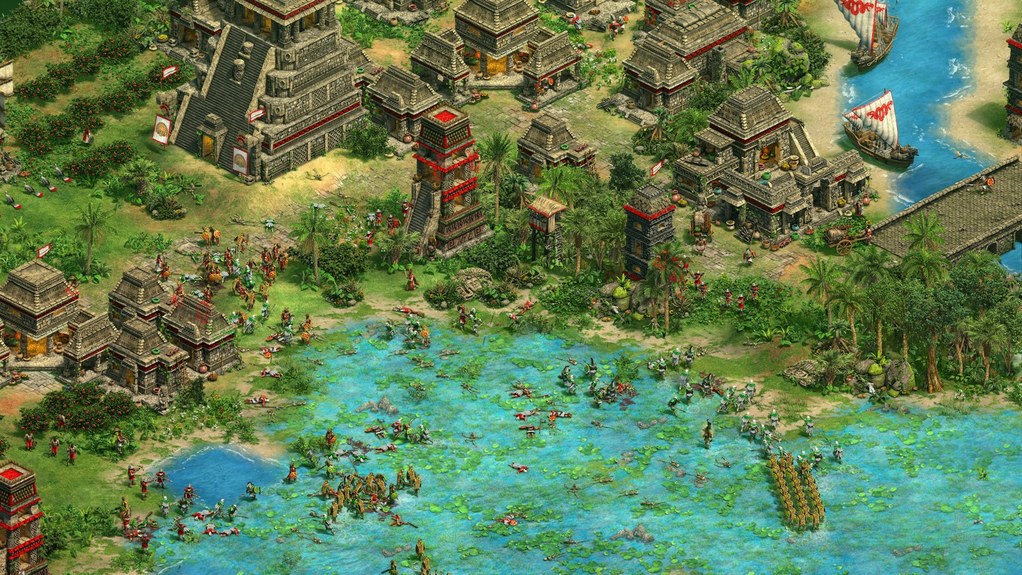
Recognizing when your build order has failed is essential for improving your gameplay and preventing setbacks in Age of Empires II.
Signs include resource bottlenecks, such as food shortages that halt villager production or wood scarcity that stops building.
Population stagnation beyond five minutes also indicates issues.
These problems suggest poor resource prioritization and reduced villager efficiency.
They require adjustments to maintain steady growth.
Resource management inefficiencies can often be the underlying cause, making it crucial to analyze your resource flow and reallocate efforts accordingly.
Understanding resource flow helps identify imbalances early and optimize your economy effectively.
Quickly Fix Resource Shortages and Stabilize Your Economy
To quickly fix resource shortages and stabilize your economy, it’s essential to take immediate action by expanding your infrastructure and optimizing resource collection. Focus on resource prioritization by building new town centers near key resource nodes, improving builder placement to reduce travel time, and maintaining continuous villager production. This ensures a steady flow of resources, preventing shortages that can halt your progress. Additionally, adjusting your build order based on the civ matchups and map type can help you adapt more effectively to changing circumstances. This approach helps balance resource flow and prevents bottlenecks efficiently.
Reassign Villagers to Key Resources for Faster Recovery
When your economy is struggling and resources are running low, reassigning villagers to key resources can considerably speed up recovery and stabilize your game. Use resource transfer techniques and hotkey optimization to efficiently reallocate villagers without losing held resources. Avoid holding CTRL during retask to prevent instant resource loss, ensuring a smooth shift to new resource types and faster economic recovery. Practicing quick and accurate build order execution enhances your ability to adapt swiftly, which is essential when building order failure occurs and you need to recover efficiently.
Make Immediate Building and Defense Adjustments
Making immediate adjustments to your buildings and defenses is essential when your game experiences stalled progress or threats from enemies. Focus on strategic building placement, such as constructing a Lumber Camp near berry bushes or a Mill on berries before the Feudal Age. Using hotkey efficiency by quickly selecting and building units like Barracks or Stables helps respond promptly to threats. Additionally, understanding the Feral Interactive port can ensure optimal game performance and stability during these crucial moments.
Recover and Reproduce Units to Keep Up the Pressure
Reproducing units quickly after losses is crucial to maintaining offensive pressure and preventing the enemy from gaining the upper hand. Focus on proper unit positioning to keep your army effective and avoid clumping, which can make units vulnerable. Manage population control carefully to guarantee you have space for new units, using spare population slots efficiently and keeping production ongoing without overextending. Additionally, understanding the console port quality ensures you’re playing a version that supports effective unit management and smooth gameplay.
Apply Long-Term Strategies to Prevent Future Failures
To prevent build order failures in Age of Empires 2, you need to focus on perfecting eco management by continuously monitoring your resources and adjusting your villager tasks accordingly. Utilizing control groups allows you to quickly organize and respond to changing situations on the map, helping you allocate units and buildings efficiently. Additionally, ongoing resource monitoring ensures you can time advances, upgrades, and defenses accurately, reducing the risk of shortages or delays that could weaken your strategy. Incorporating civilization-specific strategies, such as the Chinese’s unique start, can also give you an edge in recovering from early setbacks and maintaining a strong economy.
Master Eco Management
Effective long-term eco management in Age of Empires 2 requires careful planning and consistent execution of resource strategies to prevent future failures.
Focus on resource prioritization by maintaining a villager-to-food ratio of 6 on farms per Town Center and assigning 9 villagers to sheep early.
Improving villager efficiency through these practices guarantees a sustainable economy and reduces the risk of resource shortages.
Utilize Control Groups
Have you ever experienced losing control during an essential moment in Age of Empires 2 because you couldn’t quickly select the right units?
Using control groups improves unit organization by assigning specific groups to key numbers, allowing instant access to troops like knights or crossbows.
This method reduces reaction time, helps maintain command flow, and prevents confusion during critical battles.
Continuous Resource Monitoring
Have you ever struggled to keep your economy balanced during a game of Age of Empires 2, only to realize later that small changes in resource gathering could have prevented major setbacks?
Continuous resource monitoring allows you to track resource accumulation rates, measure gold income, and assess wood and food consumption. This helps optimize resource allocation and efficiency, preventing shortages and improving long-term strategic planning.
Scout the Enemy and Adapt Your Strategy Accordingly
To successfully adapt your strategy in Age of Empires 2, you need to gather detailed information about your enemy’s base and resources through effective scouting. Enemy scouting helps you locate critical wood lines near their town center, identify gold mines behind walls, and map stone patches for future towers. This resource prioritization informs your military and economic decisions. Additionally, observing unit movement patterns can reveal their strategic intentions and potential vulnerabilities.
FAQ
This FAQ covers what to do when a build order goes wrong.
What should I do when my build order fails?
Stop following the sequence and react. Wall your base, make spearmen or archers to survive the immediate threat, cancel any upgrades you cannot afford, and protect villagers by garrisoning under attack.
Is it better to abandon my plan completely?
Not necessarily. If you are behind, shift to a cheaper response: from a knight plan into pikemen and mangonels, or from archers into skirmishers, while recovering your economy. Keep a plan, just a smaller one.
How do I recover an idle Town Center?
Rebalance villagers towards food and keep the Town Center producing nonstop. If you have no idle time from the recovery point onward, you can still reach Castle Age only slightly later than planned.
When should I resign after a failed opening?
Only when there is no realistic path back: multiple lost Town Centers, an impossible army disadvantage, or no resources left. A failed build order is recoverable far more often than it looks.